I have Sjogren's Syndrome, pronounced“SHOW-grins”. It is an autoimmune disease that affects the body's ability to produce tears as well as affecting the exocrine (moisture) glands all over the body.
Over the last few years, something that people take for granted has become increasingly difficult for me. I can't cry, or at least not to the degree that I used to be able to or when I ordinarily would have. It really bothered me when my husband died a few years ago. Not only did I not have the release, but I worried that others would think I was cold and uncaring. I loved my husband deeply.
I used to think it was related to depression and due to things that have happened in my life that cause me to dissociate. But it turns out there is more of a physiological reason.
WHAT HAPPENS WHEN YOU SHED TEARS
To begin with, the surface of your eye is made mostly of water. And your tears are divided into two categories: Lacriminization and crying. You have lacrimal glands that are between your eyelids and your eyeball. When the gland on the outer corner of your eye, near the temple, produces a tear, you will blink and that will spread the tear across your eyeball. This takes about ¼ of a second.
Then the tear goes to the lacrimal punctum. Wikipedia describes it as follows: “ There are two lacrimal puncta in the medial (inside) portion of each eyelid. Together, they function to collect tears produced by the lacrimal glands. The fluid is conveyed through the lacrimal canaliculi to the lacrimal sac, and thence via the nasolacrimal duct to the inferior nasal meatus of the nasal passage.”
That is just a complicated way of saying there is a natural drain in your eye and from there it goes into your nasal passages and out your nose. This is why your nose also runs when you cry. Who knew?
lacrimal drainage
During periods of high tear production, like a highly emotional state or severe irritation, the drainage system can't keep up and the tears run down your face. OR at least they are supposed to.
DIFFERENT TYPES OF TEARS
Under normal circumstances, your body has three different types of tears that it can produce. They are basal, reflex and psychic tears. Basal tears serve the purpose of keeping your corneas lubricated so that your eyes don't dry out. Reflex tears form as a response to irritation like when something gets in your eyes or when you are exposed to the noxious vapors of an onion, or you open a bottle of ammonia.
And last but not least, there are the psychic tears. These are the ones you make when you are experiencing a strong emotion, like sadness or happiness, or anger or physical pain. Some people actually feel better after a good cry due to a pain-killing neurotransmitter produced by your body called leucine enkephalin. These emotional tears also contain more protein than the ones produced in response to an irritation.
YOUR AUTONOMIC NERVOUS SYSTEM AND TEARS
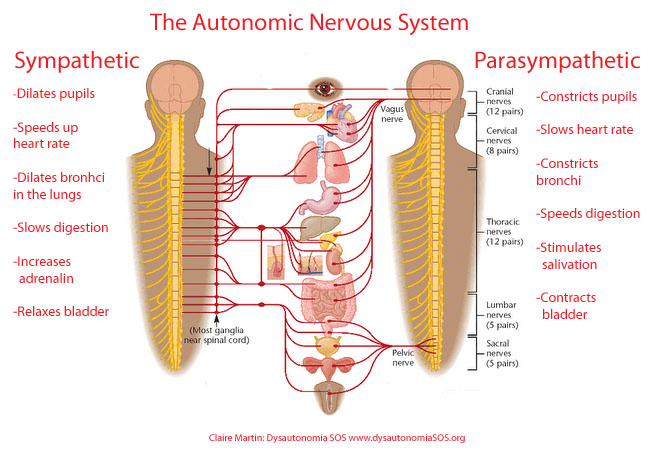
But how does this factor into your emotions? Within your brain, there is an area called the limbic system, and within it is an area called the hypothalamus. This is part of your autonomic nervous system. Your autonomic nervous system or ANS controls the things that you don't, such as tears, sweat, heart rate, breathing, etc. One of the neurotransmitters involved in the ANS is acetylcholine. It affects the lacrimal or tear-producing system.
Under normal circumstances, you feel a strong emotion, and this causes your ANS to signal tear-production.
When you cry, there are other things going on within your ANS. Part of your ANS called the sympathetic nervous system which controls the fight or flight response will also cause you to sweat, and your breathing will slow down, and you will also get what is called the globus pharyngis. That's the feeling of having a lump in your throat. When your ANS isn't working properly it is called dysautonomia.
THE PSYCHOLOGICAL AND SOCIAL RESULTS
Researchers Jonathan Rottenberg and Lauren M. Bylsma from the University of South Florida found that there are benefits to crying. Crying helps your body control breathing when it has been aroused in a negative way. https://www.livescience.com/5238-hate-cry.html
When a person experiences overwhelming stress and arousal, his or her heart rate increases and the body begins to sweat. But as a person cries, his or her breathing slows, rendering a calming effect, according to Rottenberg.
The reason some people find having a good cry pleasant is that the calming effect of crying lasts longer than whatever stressor caused them to cry in the first place.
There are major areas of your life that can be affected when you can't cry. There is more going on here than a response to a stimulus. Evolution has given you this means of crying out in a non-verbal manner to others around you. It allows them to see that you need emotional help. When you receive social input from others it strengthens your emotional bonds with them because they share in your experience. When others say, “I can see that you are sad. I am sorry you are feeling this way. How can I help? Here is a big hug.” You will feel better. And they, in turn, feel empathy and sympathy. These responses are very important when babies cry. They can't speak and therefore need to be able to communicate so that their needs are met. They cry because they are hungry or in pain or are angry. And then their parents respond to them and this causes bonding.
When you cry it can show that you are submissive or vulnerable. This can cause potential attackers to perceive you as weak and underestimate you, or feel empathy toward you, thereby avoiding an attack. In a relationship, it might cause the other person to change their behavior in many ways.
In other social situations, crying can show trust a need for affection, and this results in bonding.
There have been studies that show women actually do cry more than men. However, men cry over the most of the same things as women do, like, death, homesickness or a romantic breakup. Women cry more over small things, but men cry more in response to happiness. The differences between the sexes can be attributed to several things. Culture, male testosterone levels( which inhibit crying) and their work environments.
When you can't produce tears, how do others know that you feel grief, despair, frustration, helplessness, powerlessness, pain, happiness, anger and empathy, pride, longing, anger, frustration sadness or love? If you are able to produce the sobbing sounds of crying, people might not feel empathy toward you if they don't have the visual cue of tears and then assume you are faking the emotion. If they don't see them signaled by the shedding of tears, then we lose out on the social interaction and response that we should get. The result is that we can be isolated socially. Tears are as important as facial expressions. “research provided further evidence for the facilitating effect of tears on processing emotion recognition and social judgments. Their function seems to surpass the connection with merely enhancing sadness recognition. Rather, tears seem to play a significant role as a visual signal in terms of promoting (pro)social behavior.” Emotional Tears Facilitate the Recognition of Sadness and the Perceived Need for Social Support
Studies have found that people feel better when they are with another person when they cry, which indicates that crying helps us to bond and get emotional support from other people. Dry eyes aren't just a medical issue.
WHAT PEOPLE THINK WHEN THEY SEE RED IRRITATED EYES
Humans are also the only primates with the sclerae(the white outer layer of the eye) allowing both the color of the eye and how red the conjunctiva is to show up. Scleral redness shows important biological and social information about you. Other people make judgements about your sadness, healthiness, and attractiveness based on their perception of the redness of your eyes.
When your eyes are red it is mostly caused by blood vessels in your conjunctiva becoming dilated. The conjunctiva is the transparent membrane that covers the sclera or white part of your eye. When your eyes are red, others perceive you to be sadder, older, less healthy, and thereby, less attractive. On an evolutionary level, you don't appear to be biologically fit to a prospective mate. Binocular Symmetry/Asymmetry of Scleral Redness as a Cue for Sadness, Healthiness, and Attractiveness in Humans
People who have Sjogren's Syndrome and eye irritation can become isolated because of other people's perception of them.
EMOTIONAL BLUNTING
Something worse than all of this is that another problem can be overlooked. There is a condition or symptom of depression and almost suicidal depression. Sometimes it is called emotional blunting and other times it is called a flat affect. The Inability to CryMedical Definition of Flat affect
I had an experience with this once. I was put on an antidepressant. It caused me to feel this way. It was one of the scariest things I have ever experienced. I couldn't react to things in a normal way. I have a great sense of humor and I would be watching television and see something funny. I would think wow I know that is hilarious. But I couldn't laugh. It was like I could logically understand that it was fun and feel it but I couldn't express it. And it was similar with anger. I could see how a person might say, “that should make me angry, so I should react in a certain way.” Sadness was very strange too. Because not only couldn't I shed tears, now I couldn't even express sadness verbally. I think this is pretty close to what people on lithium feel. You can feel but you can't express. After that, I have this fear of ending up in a nursing home after a stroke, unable to speak and unable to cry, locked in my own misery.
If you have Sjogren's Syndrome and you are on SSRI's you might want to pay attention to how you experience emotions. Nienke van Leeuwen, a Ph.D. candidate in health psychology at Utrecht University in the Netherlands, found that 22 percent of patients with the Sjogren's Syndrome had "significantly more difficulty" identifying their own feelings than control participants did (Clinical and Experimental Rheumatology, 2012).
A Dutch study of 300 people showed that 22% of the patients with Sjogren's Syndrome were clinically 'alexithymic'. This means they were having difficulty identifying and describing emotions. This was compared to only 12% of healthy controls. Other studies showed that those with higher levels of alexithymia had worse mental well being, proving a link between the two.
Dr. William Frey, a biochemist at the Ramsey Medical Center in Minneapolis discovered that emotional tears contain stress hormones that are being excreted through crying. When you cry, your body also produces endorphins. Endorphins are the hormones that make us feel good and are also pain relieving. Two of these are the endorphin leucine-enkephalin and prolactin. Another is adrenocorticotrophic hormone (ACTH), which is an indicator of stress in your body. Your body is getting rid of these hormones and toxins caused by stress. Emotional tears have a 24% higher albumin protein concentration that regular tears caused by irritation. Dr. Jerry Bergman writes, “Suppressing tears increases stress levels, and contributes to diseases aggravated by stress, such as high blood pressure, heart problems, and peptic ulcers.
Crying can also lower your manganese level. Elevated manganese can cause anxiety, nervousness, irritability, fatigue, aggression, and emotional problems. Manganese Induced Oxidative Stress
When you can't produce tears, even light and air can be irritating and painful and lead a person to avoid going outside. The result is yet another way to become isolated. People with dry eyes can also end up with complications like infections and ulcers.
As you can see, tears serve more of a purpose than just keeping foreign bodies out of our eyes. And the ability to cry or not cry shouldn't be taken for granted. We are the only primates that can do it and this ability is a profound influence on our lives. I pray that someday soon there will be an answer for people like me. I know that God intended for us to be able to express a whole range of emotions and although I often can't cry about it, I am still sad.
Ecclesiastes 3:4 says that there is an appointed time for everything, “A time to weep and a time to laugh; A time to mourn and a time to dance”. Romans 12:15 says we are supposed to “Rejoice with those who rejoice, and weep with those who weep”. The shortest and one of the most profound verses in the Bible is John 11:35, “Jesus wept”.
I recently watched a video that was posted in a POTS support group. The man on the video is a chiropractor, Dr. John Bergman.
The makes it sound like things like beta blockers and tricyclic antidepressants are how POTS is typically treated. Later in the video he seems to imply that he can cure or treat POTS by doing chiropractic manipulation.
He does teach physiology, an offshoot of biology. But he really doesn't go into how the organs work much. His other field is biomechanics which is more akin to chiropractics than anything to do with neurology and internal organs. He also lists anatomy, but he pretty much skips over how the organs affect POTS.
I don't buy into the idea that you can use chiropractics for the treatment of orthostatic intolerance. And I hope you will consider all of the information here that disagrees with it. There are too many other mechanisms involved and you need to know what is causing YOUR POTS as opposed to someone else's. After you read this post, if you still think chiropractics is the way to go, there isn't much else I can say to disuade you. Underlying Causes of POTS What Is Causing Your POTS? And Why It IS A BIG DEAL: A Printable, Sourced Guide
Dr. Bergman gives very rudimentary explanations for the mechanisms that cause POTS. They are not always the same for every patient. That is why it is called a Syndrome vs Disease.
Not all POTS patients have low blood volume. It is very important to identify the type of POTS or the underlying condition that may be causing POTS because it can help your doctor decide what strategy to take for treatment. Different types of POTS include neuropathic POTS, hypovolemic POTS, hyperadrenergic POTS and POTS to due to de-conditioning. Some people have
more than one of these that cause their POTS. People with neuropathic POTS can have adrenal impairment and sudomotor denervation, which is nerve damage. This is why treatment is never a
one size fits all thing. There are even people who have autoimmune causes for their POTS, like autoimmune autonomic ganglionopathy POTS Subtype: Does It Really Matter?
"Another problem with these labels is that they are not mutually exclusive."
One of the first things he says is that doctors don't know what causes reduced blood flow returning to the heart. He quotes a NINDS Postural Tachycardia Syndrome Information Page But the dysautonomia information network gives an explanation for it. POTS mechanisms: dysautonomia information network It could be that no matter how fast the heart beats if the blood vessels in the lower body don't constrict enough to raise blood pressure, not enough
Beta blockers-- also known as beta-adrenergic blocking agents are drugs that block norepinephrine and epinephrine (adrenaline) from binding to beta receptors on nerves. Now just from that definition, you can understand that something is wrong with the adrenaline system or the receptors. He is indicating that they are bad for all patients and that they are routinely prescribed for all POTS patients, which they aren't. He says he watched a video or a speech where a Mayo Clinic doctor was saying that beta blockers work for most patients and that they work much better than calcium channel blockers. It is true that they work better than calcium channel blockers. But not that all doctors give them to all patients. And it isn't recommended to give ACE inhibitors or diuretics, but he has a slide up and makes it sound as if that is how it is commonly treated. At least some of the doctors at the Mayo Clinic say to try nonpharmacologic treatments before beta blockers. Postural orthostatic tachycardia syndrome and chronic fatigue in adolescents: Working toward recovery
"Beta blockers, including propranolol, block the receptors that are responsible
for the effects of epinephrine and norepinephrine (catecholamines produced
by the sympathetic system).We have shown in a placebo-controlled trial that
propranolol decreases heart rate and acutely improves symptoms in patients
with POTS. Interestingly, we found that symptoms were more improved by
low dose rather than high dose propranolol." Vanderbilt Autonomic Dysfunction Center--Propranolol
"The use of beta blockers in POTS is controversial, but we have seen many patients, including those who have previously failed beta blocker therapy, have success with propranolol.
They shouldn't be prescribed for all patients. However, some do benefit from a low dose."
"Some patients, particularly, those with partial dysautonomic POTS, improve on small doses
of beta blockers (e.g. metoprolol 25–50 mg once or twice daily), but the majority feel
worse on beta blockers." "The combined alpha1/beta blocker labetalol is useful in some
patients, as beta-blockade alone may worsen symptoms due to unopposed alpha-receptor
stimulation. A starting dose of 100–200 mg twice daily is used, and the maximum dose is
400 mg twice daily." Postural Orthostatic Tachycardia Syndrome (POTS): A Diagnostic Dilemma
Well, logic would tell you that for some people they will work and for some they will make things worse. That's why it's good to find out what is causing the POTS. For those who do take them, the goal is to find a dosage that slows down the tachycardia without lowering the BP too far. Sometimes it is a very low dosage. He says that it is recommended that beta-blockers be used to treat POTS and that isn't true. It is only used for some patients, not all. The above link basically talks about how it is necessary to find out what the cause of the POTS is in order to treat it properly.
Dr. Bergman points out that the heart rate speeding up is a good thing because it is your body's way of making sure blood gets to your brain and says it doesn't make sense to use beta blockers because they will slow your heart rate down and then you will get less blood flow to the brain. But he leaves out a very important fact: Studies show that long-standing persistent tachycardia in certain conditions has a potential to induce a dilated cardiomyopathy (or an enlarged and weakened heart). Tachycardia-induced cardiomyopathy can result from prolonged periods of rapid heart rates. Granted these studies were on people that had tachycardia from things like Afib or ventricular tachycardia, but it is believed that the same thing can happen from the tachycardia in POTS. Basically,where he was wrong was in indicating that the heart rate just raised and not that it raises too high, which is why it sometimes requires treatment. A resting heart rate that is over 100 bpm is tachycardia.High Heart Rate Increases Risk Of Death, Even In Fit People "resting heart rates over 90 beats per minute tripled the risk.... Every 10 to 22 additional beats per minute in resting heart rate raised the likelihood of death by 16%, overall, according to the authors." Myth: A Normal Heart Rate Is 60-100 beats per minute. " Many doctors think it should be lower. About 50-70 beats per minute is ideal, says Suzanne Steinbaum, MD, director of women's heart health at Lenox Hill Hospital." 5 Heart Rate Myths Debunked But aside from that, you won't necessarily have low blood because of a lower heart rate. Busting 5 Myths About Blood Pressure and Heart Rate He says that anything that reduces oxygen to the brain, i.e. a lower heart rate is bad. He uses the example of a giraffe and says that the giraffe would have to have a higher heart rate to get oxygen to its brain. But having a high heart rate isn't good either. "Circulatory shock, commonly known as shock, is a life-threatening medical condition of low blood perfusion to tissues resulting in cellular injury and inadequate tissue function. The typical signs of shock are low blood pressure, rapid heart rate, signs of poor end-organ perfusion (i.e.: low urine output, confusion, or loss of consciousness), and weak pulses." Shock (circulatory)And then he says that water and appropriate nerve supply are the way to treat POTS. But those things can't always be fixed so easily either.
But it also necessary to understand how the autonomic system works and that it is not entirely controlled by the spine. You can't just fix the spine and think that will fix the whole system.
For instance, if you are one of the people who have serum auto-antibodies to alpha-3-acetylcholine receptors of the peripheral ganglia then you can't alter the autoimmune response by spinal manipulation.
It causes increased noradrenaline due to impaired clearance or decreased uptake of noradrenaline by the synaptic cleft. The synaptic cleft is a gap between neurons somewhere in your body. Not in your spine. Here's a video of how that works.
(Given how dumb that guy thinks people are, it's kind of amusing that the video
called A level biology. This is just basic biology/anatomy.)
The Brain—Lesson 2—How Neurotransmission Works
Hyperadrenergic state means that more adrenaline than usual is released, and then on top of that, it isn't reabsorbed like it should be. Again, you have both a gland that is being overactive as well as nerve receptors not working right either, i.e. some sort of neuropathy.
Selective serotonin reuptake inhibitors. The reason for those is because the nerves are not working properly and they basically reabsorb the serotonin before they should.You need the serotonin to help with vasoconstriction. And contrary to what he implies, it doesn't all originate in the gut. And some people are born with a genetic difference that causes their serotonin problem.
SSRIs will make existing bipolar worse, and that sometimes means that someone who was misdiagnosed with depression will suddenly become much more manic. But it doesn't cause them to be bipolar. That is an outdated idea. DSM-5 now says that it isn't the medicine it is that they were
misdiagnosed because bipolar often presents with several bouts of depression.
He points out that tricyclic antidepressants are on the list of drugs that make POTS worse, but those are an entirely different kind of antidepressant and work differently and he says they are one of the most prescribed drugs. But they really aren't recommended. POTS: What to Avoid He doesn't make clear whether or not he means in general or for POTS. There is no doubt that a certain percentage of people can become suicidal on antidepressants, but it's irresponsible to indicate that everyone or even a large percentage of people will or that they will become bipolar. For one reason, it's difficult to tell if a person who is put on an antidepressant might not have committed suicide regardless of whether or not they were put on medication. There is an increased risk in some studies, but in others there is a decreased risk. Antidepressants and Suicide in Adolescents and Adults
People usually become bipolar before the age of 25. He also says that the tricyclics are one of the most prescribed drugs for POTS. But that isn't true. SSRI and SNRI are the usual ones, particularly Celexa Autonomic Disorders: Syncope Dysautonomia & POTs or Postural Tachycardia Syndrome . That's why that list he was reading off said they would make POTS worse. It was so that doctors would be careful about using tricyclic antidepressants for POTS, not to suggest them for treatment. The dysautonomia information network says to avoid them. And they are quoting Dr. Blair Grubb at the University of Toledo Medical Center. He is one of the leading experts on POTS. So the experts are not recommending them as is implied.
I don't know if he figures the average person doesn't have a very good understanding of the body, or if he himself doesn't. I mean the way he presents the video is that he is trying to make a complicated subject easier to understand. But you don't do that by leaving out part of the information or being inaccurate.
He keeps saying that people just need more water and not beta blockers. Again, not everyone is prescribed beta blockers and some people have POTS because no matter how much water they drink, their body doesn't utilize it properly.
Sodium and potassium in the body are very important and besides controlling water in the body they also help with the voltage in the nerves and outside the nerves.Hypovolemia is related to sodium (salt) depletion which causes loss of water inside the blood vessels and is different from dehydration, which is excessive loss of body water.This basically means that if you aren't adding extra salt to your diet, it won't matter how much water you drink. If for some reason your kidneys aren't releasing ADH (anti-diuretic hormone) then how much water you drink isn't going to help either.
"Patients should not drink excessive amounts of water because doing so can cause
essential electrolytes to become diluted in the bloodstream, which may affect heart
rhythm." POTS: What Helps
You can also find some basic information on how salt and your kidneys affect how your body uses water, despite how much you drink. If you drink more water than your kidneys can handle and the sodium in your body gets diluted it is called hyponatremia. The recommended amount of water
is about 64 oz. or about 2 liters. For men. the amount is higher, about 3 liters. That's about eight 8 oz. cups(13 for men). Preventing and treating orthostatic hypotension: As easy as A, B, C
You might want to drink more if you are in a hot climate or exercising. Then you could drink about twice that if you are a man. It's right after he tells people how much water they should be drinking and how much salt they should consume that he says there shouldn't be one guideline for anyone but different amounts for different people. This is kind of amusing considering for the rest of the video he is basically telling everyone to do the same thing. Even though he says that no two people will need the exact same spinal adjustment, he is still implying that everyone with POTS regardless of cause needs their spine adjusted.
Adrenal fatigue, he indicates that it is only caused by stress. It isn't even a proven medical condition. For those that believe in it, it is hypothesized that in the early stages there is too much adrenaline due to stress and then later not enough adrenaline. The theory is that the adrenaline is just slightly
low and that blood tests aren't sensitive enough to show it. But actual adrenal insufficiency can be found by tests. It is also known as Addison's disease. And that isn't caused by stress. It is an autoimmune disease. You can't cure that by reducing stress.
He says this unrecognized condition of adrenal fatigue causes autoimmune disease. But Addison's
disease an autoimmune disease itself and is often found with other autoimmune diseases like thyroid disease. To put that another way: he is saying that adrenal fatigue causes Addison's disease. Now how in the world does having a slightly lower than normal adrenaline level, (because that is what adrenal fatigue is) cause an autoimmune disease? All of the other symptoms he lists are caused by autoimmune diseases too.
POTS is often misdiagnosed as anxiety/stress or as this guy indicated it is said to be the cause of
it. It is true that POTS and anxiety are associated with over-activation of the sympathetic nervous system. But POTS happens because of things that are activated by standing or physical activity. But anxiety/stress can occur regardless of your body position. While he is talking about hyperadrenergic POTS and says that it can be caused by impaired clearance or decreased uptake by the synaptic cleft, he then turns around and says too much adrenaline is caused by physical, chemical or emotional stressors. But he just said that a Postgraduate Medical Journal said it was caused by not being reabsorbed like it should not by too much being released. One type of hyperadrenergic POTS is caused by a tumor called pheochromocytoma. That is most definitely not caused by a chronically stressed state.
He points out that he did a search for vaccines that cause POTS and got 9,440 results, allowing the viewer and his audience to believe that there are other vaccines that cause POTS. And he says not to take any vaccines even though HPV/Gardasil is the only one that he points out as causing POTS. If you do a search, that is probably the only one you are going to find either. And only 3 states mandate HPV vaccine for school, but he says they all do. He also says that boys have to take it even though it's just to prevent cervical cancer. It also isn't a vaccine for cervical cancer. It is for genital herpes, which can cause cervical cancer and genital cancer in boys and anal cancer in both. Besides preventing genital cancer in boys, the idea is to stop the spread of it because if a boy gives it to a girl she can then get cancer and so can he. I'm not recommending the vaccine, just pointing out how inaccurate the things he says are.
As it turns out he was wrong even about Gardasil causing POTS. So, it doesn't matter what anyone turns up in a search because the CDC determined that it doesn't and the old links are now outdated. "In November 2015, the European Medicine’s Agency completed a detailed review of available POTS data from young women who received HPV vaccines. The review found that the evidence does not support a causal link between HPV vaccines and POTS." Centers For Disease Control:Frequently Asked Questions about HPV Vaccine Safety I don't know when he made the video, but it was just uploaded a few days ago. So the information was out there for him almost a year ago.
Antibiotics: he names them off as bad too. What do you do if you have an autoimmune disease that causes your POTS and you are on an immunosuppressant and get an infection?
It seems like much of what he says is unfounded information. He could be correct about some things, but I wasn't able to find sources that backed him up, and it was a lot easier to find sources that contradicted him.
He recommends really high doses of vitamin D.(8000 IU per day).
Then he says chiropractic adjustment takes pressure off of the nervous system. But there is much more to the nervous system than just the nerves.
There are even three different parts to the nervous system, the central(CNS), peripheral(PNS), and autonomic nervous systems(ANS). You can think of it like this: The CNS sends commands out to the PNS. The PNS has receptors that are affected by chemicals and they send information back to the CNS which is the brain and spine.
Sometimes information goes straight to the brain so that the brain can decide what response to have. Other times, information goes to the spine and the spine basically makes the decision before it ever gets to the brain. This is called the reflex loop.
If this was what always happened, then it would make sense for spinal manipulation to work. But it isn't. You can work on the spine all you want, but it won't either make the brain work better or have any effect on those receptors on the other end of the PNS.
There are lots of things that can interfere with this communication system. For instance, the myelin sheath on nerves can be damaged. This happens with Multiple Sclerosis or a severe electrical shock or lightning strike. Myelin serves the same purpose as the plastic coating on an electrical wire. It keeps the electrical charge from leaking into the surrounding tissue. If it's damaged, the signals can fade or disappear. This is called demyelination. They don't get where they were supposed to be going.
He briefly touched on the parasympathetic and sympathetic nervous systems, which are the chemicals switching on some things and switching off some things. Those fight or flight hormones are also
countered by rest and digest hormones that control things like your digestive system.It cannot be helped by working on your spine.
The autonomic nervous system could also be called the automatic nervous system and it is controlled by your brain stem. It controls things like your internal organs. He refers to a journal that calls those organs your viscera. You would be well advised not to mess with your brain stem by doing some kind of adjustment, particularly in an effort to effect the heart. When he quotes a journal saying that it(manipulating the spine to affect the heart) MAY work, he is quoting a chiropractic journal(Journal of Manipulative and Physiological Therapeutics) and not a medical journal. If you look that journal up it says that this is at odds with classic views of neuroscientists about the potential for somatic stimulation of spinal structures to affect visceral function. http://www.jmptonline.org/article/S0161-4754(00)90076-9/abstract Why do you suppose he chose to leave out that neuroscientists don't agree with this theory?
When he starts talking about the sympathetic nervous system being located in the thoracic spine, that is true. But when it sends out signals, it also needs those chemicals/neurotransmitters like acetylcholine and norepinephrine sometimes called noradrenaline.
Part of the parasympathetic nervous system originates in the sacrum/lower spine and some of it up in the brain stem area called the medulla. It also requires acetylcholine. He says that if you work on one of these areas of the spine it will change the nerve supply and function of the organs.He seems to be talking about the sympathetic area of the spine and forgetting that the parasympathetic system
even plays a part. The reason I say this is because he refers to the thoracic area of the spine and
keeps talking about the "fight or flight" response and stress. But some people with dysautonomia
have problems with the parasympathetic nervous system. If you think of the sympathetic nervous
system as the ON switch and the parasympathetic as the OFF switch. A problem can be just as much a problem of the OFF switch not working as it can be of the ON switch working too much. The sympathetic nerves originate in the spinal area; they are fairly short and close to the organs they stimulate (a few inches in length). When they switch on, they do so quickly and the entire system is "on." The parasympathetic nerves, on the other hand, originate mostly from the brain, but some originate from the bottom of the spine, so they travel much longer distances to the organs which they stimulate (several yards); they are much slower to react and because of this it takes a much longer time for the body's systems to "turn off." You can easily see from this explanation that because some of these nerves originate in the brain, working on the spine won't fix problems with how they work.
If you think of this like a telegraph system, then he is talking about working on the telegraph machine itself. But then you still have the wires themselves as well as the telegraph machine on the other end that he isn't taking into account. Then you have to factor in the chemicals and hormones which are basically the electricity running through that wire.
He points out exercise as being a treatment for POTS. The problem is it doesn't work for everyone.
They have also done studies that show why it doesn't work. It is coauthored by Svetlana Blitshteyn
She is another expert on POTS.
"This study provides the first objective evidence that low ventricular filling pressures
in patients with POTS are contrary to what would be expected in deconditioned
patients—high filling pressures.Although the benefits of exercise have been acknow-
ledged in several studies, almost 60% of patients with POTS are unable to complete
an exercise training program despite their efforts. Importantly, Oldham et al.
demonstrate that exercise intolerance in POTS is not caused by a lack of maximum
effort from the patient but that low ventricular pressures occur despite the maximum
effort." Pulmonary Vascular Research Institute.
I can entirely understand not wanting to take medications that might have side effects.
But it is bad medicine to say that it is a viable option for everyone. If you keep an open mind and really want to understand how your nervous system works and watch these videos, you can learn. And once you do, it probably won't seem so much like what he says makes any sense. Just because he is recommending not taking medicine,which works for some patients, doesn't mean that everything else he says makes sense.
You will see that there is much more involved than just the spine. He way oversimplified it. For instance, spinal manipulation might help if you have bowel problems related to your POTS causing a balancing effect on the nerves that supply impulses to the intestinal tract.
But what about that serotonin that originates in the gut or other neurotransmitters? If those are out of balance, you may still have problems. That doesn't even factor in the enteric nervous system. It works like a secondary brain and has structures and chemicals similar to those in the brain. It has sensory and motor neurons and information processing circuits, as well as glial cells. It uses neurotransmitters: dopamine, serotonin, acetylcholine, nitric oxide, and norepinephrine. It even has benzodiazepines, similar to Valium and Xanax.
The Nervous System - CrashCourse Biology #26
Autonomic Nervous System: Crash Course A&P #13(This one explains how the parasympathetic
and sympathetic originate in different areas of the body)
Sympathetic Nervous System: Crash Course A&P #14 This one explains how hormones and neurotransmitters are necessary to the system. And they have nothing to do with chiropractics. And quite a bit to do with nerve receptors. If you pay close attention it touches on alpha and beta receptors, which are why beta blockers are used. And the adrenal glands, which if there is something wrong with them, cannot be fixed by spinal manipulation or drinking water.
Parasympathetic Nervous System: Crash Course A&P #15 This one explains how your parasympathetic system is supposed to keep your heart rate down. Remember that it doesn't originate in the thoracic area that this guy keeps referring to. And many of them don't even run through the spine. Check out the vagus nerve which goes from the brain directly to the heart, lungs, and stomach. No spine involved.
Peripheral Nervous System: Crash Course A&P #12 The peripheral nervous system doesn't start at the spine. It starts on the other end. And if the receptors, etc. on that end don't work right, they aren't going to send information back to the spine the way they should. And even though the information goes through the spine, ultimately it should end up in the brain. And the brain should affect the response.
I gave a lot of sources because at the end of his video he gave some sources. The first page
and a half of them are about side effects of medicines that I have shown are not always given for POTS and many of which aren't recommended by doctors who specialize in POTS, like cardiologists and neurologists.
Chiropractic manipulation has its place. It eases people's pain and that will help their overall health but in my opinion, it doesn't seem to be good science to say that it can do the things he claims.
I recently had a short stay in the hospital for low blood pressure and a slow heart rate(also called Bradycardia). I had a few EKG's, an Echocardiogram, and a Stress Test. The doctors took me off of my beta blocker that I have been on for years. When my blood pressure leveled out, they sent me home.
My doctor was out of town at the time and not expected to be back for a few weeks. A few days after I got home, I started having dizzy spells (Syncope). So, I started checking my blood pressure and it was high. I decided I didn't want to go back to the hospital and would wait it out and see what my doctor said when she got back. Since I had gone from really low BP and heart rate to having high BP and HR, I decided to look up how to do a "Poor Man's Tilt Table Test". You can read more on how to do this here. And there is a link to the right on what a tilt table test is.
I had some help doing it, but we did three of them. All three of them caused my BP and HR to raise over the requisite 30 beats above the resting BP and HR.
I knew what Orthostatic Hypotension was. It is sometimes also called Neurally Mediated Hypotension.But with it, your blood pressure drops 25 mmHg, without the increase in HR that I was having. When my husband was diagnosed, they didn't separate out Orthostatic Hypotension from POTS. And depending on who was talking to us, they were using the two terms interchangeably. Now they are two distinct diagnoses, although you can have both.
I was pretty concerned because I had never heard of BP going up to the degree mine was when I stood up. So, I did a google search.
I found out that there is a subclass of orthostatic intolerance that causes this called ORTHOSTATIC HYPERTENSION. This is what I could find out about it. There wasn't much information available.
In general, it is simply when your BP rises upon standing. Orthostatic hypertension was defined as either an increase in DBP (diastolic) from <90 mmHg to ≥90 mmHg or an increase in SBP(systolic) from <140 mmHg to ≥140 mmHg.
Studies have shown that people who have Mast Cell Activation Syndrome and POTS sometimes have Orthostatic Hypertension. People with baroreflex failure also have bouts of it. Another rare condition called norepinephrine transporter deficiency can also cause this increase in blood pressure on standing. And pheochromocytoma can also cause it. And finally, diabetes can cause it. Diabetics are prone to having neuropathy (nerve damage), and it is likely that neuropathy has some connection to Orthostatic Hypertension.
Patients usually have venous pooling in the lower legs. This means that a large amount of blood collects in your lower legs when you stand up. This causes a decrease in the cardiac output of your heart. That in turn, causes your sympathetic nervous system to become activated. And then your arteries become severely constricted. This is similar to the POTS occurs. POTS happens because of dysautonomia in the lower legs which results in venous pooling. But the difference is that POTS patients don't always have symptoms of Orthostatic Hypertension.
Different studies have used different criteria for diagnosing Orthostatic Hypertension.
One study used the following: ≥20 mmHg increase in SBP upon assuming an upright posture ( head-up tilting to 70 degrees) from the supine position.
Generally, this result needs to be reproducible because people with conditions like essential hypertension (regular high blood pressure) or diabetes have more variation in blood pressure readings than otherwise healthy people.
Aside from the rise in BP when you stand there are other tests that need to be run in order to diagnose underlying causes. Your doctors need to know if there is something that needs to be corrected with surgery, or if you have baroflex failure.
To treat it, the most obvious line of treatment is to treat your high blood pressure, if you have it. Activation of the sympathetic nervous system should be controlled with things like alpha-1 adrenergic receptor antagonists such as prazosin, or central alpha-2 adrenergic receptor agonists such as clonidine.